
|


| Navigation: Famous Quotes and Authors - Thomas Carlyle Quotes |

|

|

|
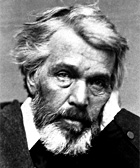
Thomas Carlyle Quotes and Quotations
 There is endless merit in a man's knowing when to have done. - Thomas Carlyle | Ability and Achievement Quotes  Acorns are planted silently by some unnoticed breeze. - Thomas Carlyle | Birth Quotes The true university of these days is a collection of books. - Thomas Carlyle | Books and Reading Quotes The three great elements of modern civilization, Gunpowder, Printing, and the Protestant Religion. - Thomas Carlyle | Civilization Quotes The courage we desire and prize is not the courage to die decently, but to live manfully. - Thomas Carlyle | Courage and Bravery Quotes Innumerable are the illusions and legerdemain tricks of custom: but of all these, perhaps the cleverest is her knack of persuading us that the miraculous by simple repetition ceases to be miraculous. - Thomas Carlyle | Habit and Tradition Quotes In the long run every government is the exact symbol of its people, with their wisdom and unwisdom. - Thomas Carlyle | Government and Rule Quotes No sadder proof can be given by a man of his own littleness, than disbelief in great men. - Thomas Carlyle | Greatness Quotes History is the essence of innumerable biographies. - Thomas Carlyle | History and Historians Quotes Nine-tenths of the miseries and vices of mankind proceed from idleness. - Thomas Carlyle | Idleness Quotes Macaulay is well for awhile, but one wouldn't live under Niagara. - Thomas Carlyle | Insults and Calumny Quotes The tragedy of life is not so much what men suffer, but rather what they miss. - Thomas Carlyle | Life Quotes Music is well said to be the speech of angels. - Thomas Carlyle | Music Quotes Who is there that, in logical words, can express the effect music has on us? A kind of inarticulate, unfathomable speech, which leads us to the edge of the Infinite and lets us for moments gaze into that! - Thomas Carlyle | Music Quotes When the oak is felled the whole forest echoes with its fall, but a hundred acorns are sown in silence by an unnoticed breeze. - Thomas Carlyle | Nature Quotes Burke said there were three Estates in Parliament; but in the reporters' gallery yonder, there sat a fourth Estate more important than them all. - Thomas Carlyle | Newspapers and Journalism Quotes If Jesus Christ were to come today, people would not even crucify him. They would ask him to dinner, and hear what he had to say, and make fun of him. - Thomas Carlyle | Progress Quotes All reform except a moral one will prove unavailing. - Thomas Carlyle | Revolution and Reform Quotes Silence is deep as Eternity; speech, shallow as Time. - Thomas Carlyle | Silence Quotes All work is seed sown. It grows and spreads, and sows itself anew. - Thomas Carlyle | Work Quotes Work is the grand cure of all the maladies and miseries that ever beset mankind. - Thomas Carlyle | Work Quotes He that can work is a born king of something. - Thomas Carlyle | Work Quotes Blessed is he who has found his work; let him ask no other blessedness. He has a work, a life-purpose. ... Get your happiness out of your work or you will never know what real happiness is. ... Even in the meanest sorts of labor, the whole soul of a man is composed into a kind of real harmony the instant he sets himself to work. - Thomas Carlyle | Happiness Quotes Without kindness, there can be no true joy. - Thomas Carlyle | Helping Other People Quotes Faith is loyalty to some inspired teacher, some spiritual hero. - Thomas Carlyle | Faith and Unity Quotes Our grand business undoubtedly is not to see what lies dimly at a distance but to do what lies clearly at hand. - Thomas Carlyle | One Day Quotes Time is the silent, never-resting thing ... rolling, rushing on, swift, silent, like an all-embracing oceantide, on which we and all the universe swim. - Thomas Carlyle | One Day Quotes The present is the living sum-total of the whole past. - Thomas Carlyle | The Present Quotes Here hath been dawning another blue day: think, wilt thou let it slip useless away? - Thomas Carlyle | Mornings Quotes Every noble work is at first impossible. - Thomas Carlyle | Positive Quotes Give me a man who sings at his work. - Thomas Carlyle | Enthusiasm Quotes Today is not yesterday; how can our works and thoughts, if they are always to be the fittest, continue always the same? Change, indeed, is painful, yet ever needful. - Thomas Carlyle | Creating Positive Change Quotes It is the heart always that sees before the head can see. - Thomas Carlyle | Decisions Quotes Of all paths a man could strike into, there is, at any given moment, a best path which, here and now, it were of all things wisest for him to do. To find this path, and walk in it, is the one thing needful for him. - Thomas Carlyle | Decisions Quotes It is the heart always that sees, before the head can see. - Thomas Carlyle | Instincts Quotes Of all the paths a man could strike into, there is, at any given moment, a best path ... a thing which, here and now, it were of all things wisest for him to do ... to find this path, and walk in it, is the one thing needful for him. - Thomas Carlyle | Right Quotes The great law of culture: Let each become all that he was created capable of being. - Thomas Carlyle | Right Quotes Nothing is more terrible than activity without insight. - Thomas Carlyle | Goals Quotes All work of man is as the swimmer's: a vast ocean threatens to devour him; if he front it not bravely, it will keep its word. - Thomas Carlyle | Risks Quotes The courage we desire and prize is not the courage to die decently, but to live manfully. - Thomas Carlyle | Courage Quotes The end of man is action. - Thomas Carlyle | Getting Going Quotes Adversity is sometimes hard upon a man, but for one man who can stand prosperity, there are a hundred that will stand adversity. - Thomas Carlyle | Success Quotes Give me a man who sings at his work. - Thomas Carlyle | Work Quotes The block of granite, which was an obstacle in the path of the weak, becomes a stepping stone in the path of the strong. - Thomas Carlyle | Problems Quotes All work of man is as the swimmer's: a vast ocean threatens to devour him; if he front it not bravely, it will keep its word. - Thomas Carlyle | Problems Quotes The block of granite which was an obstacle in the path of the weak becomes a steppingstone in the path of the strong. - Thomas Carlyle | Adversity Quotes Adversity is sometimes hard upon a man; but for one man who can stand prosperity, there are a hundred that will stand adversity. - Thomas Carlyle | Adversity Quotes Love is not altogether a delirium, yet it has many points in common therewith. - Thomas Carlyle | Passion Quotes Love is ever the beginning of Knowledge as fire is of light. - Thomas Carlyle | Life Quotes If you can walk, you can dance. Zimbabwe saying Music is well said to be the speech of angels. - Thomas Carlyle | Applause Quotes The eternal stars shine out as soon as it is dark enough. - Thomas Carlyle | Affliction Quotes Biography is the only true history. - Thomas Carlyle | Biography Quotes Debt is a bottomless sea. - Thomas Carlyle | Borrowing Quotes Experience is the best of schoolmasters, only the school-fees are heavy. - Thomas Carlyle | Experience Quotes I grow daily to honor facts more and more, and theory less and less. - Thomas Carlyle | Facts Quotes The greatest of faults, I should say, is to be conscious of none. - Thomas Carlyle | Fault Quotes Hero-worship exists, has existed, and will forever exist, universally among mankind. - Thomas Carlyle | Hero Quotes History, a distillation of rumor - Thomas Carlyle | History Quotes Burke said there were Three Estates in Parliament; but, in the Reporters' gallery yonder, there sat a Fourth Estate more important far than they all. - Thomas Carlyle | Journalism Quotes The man who cannot laugh is not only fit for treasons, strategems, and spoils, but his whole life is already a treason and a stratagem. - Thomas Carlyle | Laughter Quotes One life - a little gleam of Time between two Eternities. - Thomas Carlyle | Life Quotes Man is a tool-using animal. - Thomas Carlyle | Machine Quotes We arc the miracle of miracles, the great inscrutable mystery of God. - Thomas Carlyle | Man Quotes Music is well said to be the speech of angels. - Thomas Carlyle | Music Quotes Poetry, therefore, we will call Musical Thought. - Thomas Carlyle | Poetry Quotes His religion at best is an anxious wish, - like that of Rebelais, a great Perhaps. - Thomas Carlyle | Religion Quotes Every noble crown is, and on Earth will forever be, a crown of thorns. - Thomas Carlyle | Royalty Quotes Silence is more eloquent than words. - Thomas Carlyle | Silence Quotes Skepticism means, not intellectual doubt alone, but moral doubt. - Thomas Carlyle | Skepticism Quotes Every noble crown is, and on earth will ever be, a crown of thorns. - Thomas Carlyle | Sorrow Quotes Speech is silvern, silence is golden. - Thomas Carlyle | Speech Quotes Of a truth, men are mystically united: a mystic bond of brotherhood makes all men one. - Thomas Carlyle | Sympathy Quotes A fair day's wages for a fair day's work: it is as just a demand as governed men ever made of government. - Thomas Carlyle | Wages Quotes Wonder is the basis of worship. - Thomas Carlyle | Wonder Quotes No sadder proof can be given by a man of his own littleness, than disbelief in great men. - Thomas Carlyle | Sad Quotes No sadder proof can be given by a man of his own littleness, than disbelief in great men. - Thomas Carlyle | Sad Quotes No sadder proof can be given by a man of his own littleness, than disbelief in great men. - Thomas Carlyle | Sad Quotes No sadder proof can be given by a man of his own littleness, than disbelief in great men. - Thomas Carlyle | Sad Quotes No sadder proof can be given by a man of his own littleness, than disbelief in great men. - Thomas Carlyle | Sad Quotes No sadder proof can be given by a man of his own littleness, than disbelief in great men. - Thomas Carlyle | Sad Quotes No sadder proof can be given by a man of his own littleness, than disbelief in great men. - Thomas Carlyle | Sad Quotes No sadder proof can be given by a man of his own littleness, than disbelief in great men. - Thomas Carlyle | Sad Quotes 
|
|


| The Quotes on this website are the property of their respective authors. All information has been reproduced on this website for informational and educational purposes only. Copyright © 2011 Famous Quotes and Authors.com. All Rights Reserved. |
